Is Overnight EV Charging Cheaper? Time-of-Use Tariff Guide
Published · Updated
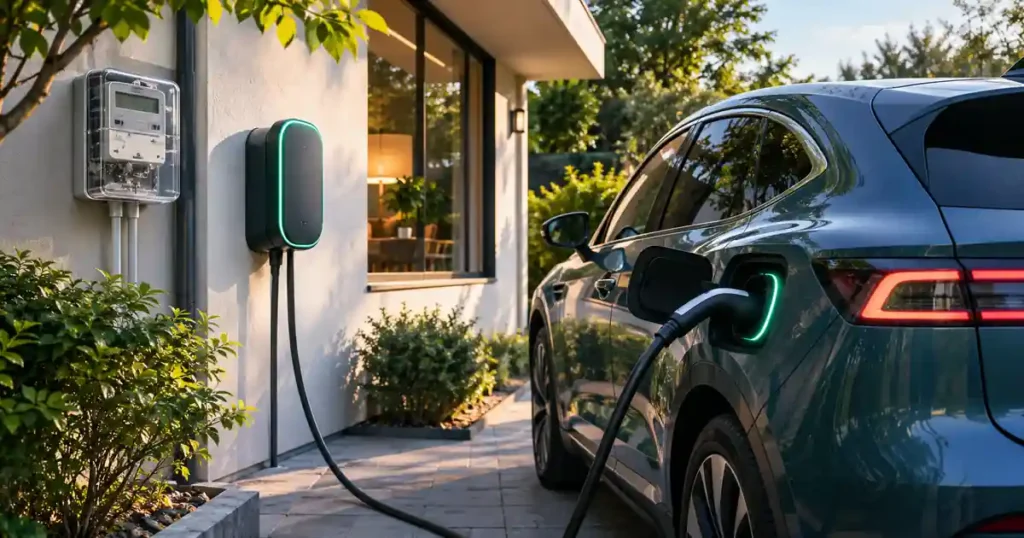
Is it cheaper to charge an electric car overnight? It can be, but only when the applicable electricity plan charges less for those hours. A time-of-use tariff may offer lower off-peak rates; a flat-rate plan normally charges the same energy price at different times.
A scheduled charge is not automatically a discount. Compare the complete tariff, including peak prices, fixed charges, time windows and how much of your household electricity shifts along with EV charging.
How overnight EV electricity tariffs work
Time-of-use (TOU) plans split the day into charging-price periods. These may include off-peak, mid-peak and peak hours. The exact schedule, seasonal rules and available plan types depend on the utility and jurisdiction.
Ofgem defines time-of-use electricity tariffs as prices that vary according to when energy is consumed. See Ofgem’s energy terms and your supplier’s current plan terms. Ontario residential customers can compare plan choices through the Ontario Energy Board rather than relying on a generic overnight rate.
Simple example: overnight versus daytime charging
Assume an EV needs 200 kWh of wall electricity per month. At a hypothetical off-peak energy price of $0.12/kWh, energy-only charging costs $24. At a hypothetical daytime price of $0.24/kWh, it costs $48. That is a $24 monthly difference for the same electricity.
These are sample prices, not a live rate for any country, state, province or supplier. The comparison assumes the entire 200 kWh qualifies for the stated rate and omits fixed fees, tax differences and demand charges.
| Charging schedule | Monthly wall energy | Illustrative unit price | Energy charge |
|---|---|---|---|
| All off-peak | 200 kWh | $0.12/kWh | $24.00 |
| Half off-peak; half peak | 200 kWh | $0.12 / $0.24 | $36.00 |
| All peak | 200 kWh | $0.24/kWh | $48.00 |
Calculate blended EV charging cost
If you charge in several rate periods, multiply the kWh in each period by its rate and sum them. A weighted average rate is useful for a quick comparison, but it must reflect the actual electricity split across hours.
For example, 70% of 200 kWh off-peak at $0.12, 20% mid-peak at $0.18 and 10% peak at $0.24 gives 140 × 0.12 + 40 × 0.18 + 20 × 0.24 = $28.80 per month.
You can enter your own periods and rates in the EV electricity bill slab and time-of-use calculator. It supports different currencies and sample tariffs, but you must replace examples with the rates printed on your plan.
When overnight charging might not be cheaper
You are on a flat electricity plan
On a fixed unit-rate plan, moving a kWh from afternoon to night may not change its billed price. Check whether any separate demand pricing or incentives apply before expecting a saving.
Higher peak prices offset the overnight discount
Some TOU plans trade cheaper overnight energy for more expensive peak energy. If your household uses air conditioning, electric heating or other large loads at peak times, switching the whole account can increase the bill even while EV charging becomes cheaper.
Demand charges and minimum bills
Certain electricity accounts include fees tied to maximum load or a minimum bill. If simultaneous home loads create a new demand peak, cheap per-kWh energy alone may not determine the outcome. Residential rules vary widely.
Most charging happens away from home
Public stations often have their own tariffs and fees, and the network may control pricing. The Alternative Fuels Data Center’s public charging guidance explains different public charging contexts. For a wider discussion of AC home charging and DC fast charging convenience, see our home vs public fast charging comparison. If you frequently use public chargers, compare their cost separately with the home versus public EV charging calculator.
How to schedule overnight charging safely
- Read the exact off-peak start and end times and confirm whether weekends or seasons differ.
- Use your vehicle’s charging schedule or your charging equipment’s supported scheduling feature, if available.
- Set the target charge level appropriate for your vehicle and travel needs, following the manufacturer’s instructions.
- Avoid exceeding the circuit’s safe load or using unapproved electrical adapters. Ask a qualified installer about equipment and load.
- Review the next bill and your charger logs to see whether charging actually moved into the discounted period.
The US Department of Energy’s home charging guidance covers home charging equipment, installation and typical overnight use. Follow local electrical requirements instead of treating a cost guide as an installation manual.
What about solar charging during the day?
If you have solar panels, the cheapest charging hours might be sunny daytime hours rather than overnight. The effective savings depend on self-consumed solar energy, import prices, export credits and your vehicle’s availability during the day.
Compare the value of daytime solar energy used by the EV against what the household would otherwise earn for exporting it. Do not label solar electricity as universally free; equipment costs and lost export value can matter. Try the Solar + EV Charging Savings Calculator to compare those values.
UK, Canada, USA, Australia and India: why the answer differs
There is no single worldwide overnight charging tariff. For example, a UK charging guide needs supplier-specific off-peak schedules, while the Canada charging guide discusses provincial differences and Ontario plan choices. Our US, Australian and Indian guides explain local context and link to public tariff sources.
When comparing plans, start with your supplier’s current rate card and effective date. Temporary offers, taxes, distribution charges, seasonal thresholds and vehicle-specific programs can change the result.
A practical tariff-comparison checklist
- Write down the off-peak, shoulder and peak energy prices, including which charges are volumetric.
- Confirm hours and seasonal changes, then estimate how much of your EV’s wall kWh occurs in each period.
- Recalculate household usage outside the EV as well. A plan that benefits the car may penalize other peak loads.
- Compare fixed charges, minimums, demand pricing, fees, discounts and any required charger.
- Keep your present plan as the baseline; compare total monthly bills rather than advertising only the cheapest kWh.
Frequently asked questions
Common questions, answered
Is charging an EV after midnight always cheaper?
No. You need a tariff with a lower applicable rate during those hours, and other tariff terms still matter.
Does Level 2 charging automatically get an off-peak discount?
No. Equipment power and utility pricing are different variables. Level 2 typically charges faster than Level 1, but the tariff determines electricity prices.
Can off-peak tariffs save money on electric scooter charging too?
Potentially. The same tariff rules can apply to any electricity used at that meter, although a scooter generally uses less energy per session than an electric car.
What if my off-peak period changes by season?
Estimate each season using its published rate window and your likely charging kWh. Avoid assuming that one monthly rate applies all year.
Check your actual saving
Use the EV charging TOU and slab calculator for rate bands and the home vs public charging calculator when comparing public station costs. See the methodology page for the underlying energy and tariff assumptions.
Editorial note: All example prices in this article are hypothetical. Tariff availability, pricing, eligibility and safety requirements must be verified with the relevant provider.